HAPPY PASSOVER FROM KOSHER CREATE
A New BEGINNING
Welcome to Kosher Create. The spring is here and Passover is nearing. After a long winter, this welcomed change of season inspires renewal – a new beginning. Interestingly, the month of Nisan is regarded in the Torah as the beginning of the year. (See Exodus 12, verse 2)
Conceptually, Passover signifies liberation. It is the holiday of freedom חג החירות. Effectively, the physical extraction from Egypt’s slavery had to be matched with a mental process of redemption. To a large extent, the biblical Book of Exodus – ספר שמות showcases this process – מעבדות לחירות. Our goal is to uphold this ideal, especially as we get ready for this significant holiday.
Preparing for Passover
Here, at Kosher Create, we’d love to help you navigate the preparations for Passover. We invite you to benefit from our free Passover resources and hope that they will assist your planning. Notably, food plays a vital role in Jewish festivities. We cherish the flavor, aroma and texture of our unique holiday traditions. We partake in the ceremonies and symbolism of these foods. (See for example: Rosh Hashanah’s Simanim.) But during Passover food serves another purpose – to abide by the restriction of excluding chametz.
Healthy Passover Recipes
Feel free to browse our tried-and-tested Healthy Passover Recipes – all of them are both healthy and Kosher for Passover. Please note that some include Kitniyot (Click to see note about kitniyot.) Also note that “Kosher for Passover” is NOT synonymous with “Gluten free”.
Healthy Recipes for seder
If you’re planning a Seder (or two if you’re not living in Israel), you’ll find our Healthy Passover Menus especially helpful.
Healthy Passover Desserts
And if you’re looking for a Kosher for Passover treat, we invite you to visit our Healthy Passover Desert Collection.
Passover Q & A
We’d love to share more about Passover or Pesach as it’s called in Hebrew. The Passover festive dinner is called Seder. Its core theme is telling the story of the Israelites’ redemption from ancient Egyptian slavery. The story unfolds by implementing a clever device – asking questions that illustrate how different is this night from every other night מה נשתנה הלילה הזה מכל הלילות. In the spirit of Passover, we’ve included a helpful Q & A section that includes information about the Seder ceremony.
We hope you enjoy this meaningful holiday. And, as always, Take Care.
Wishing you a Happy Passover!
YOURS,

PASSOVER RESORCES by KOSHER CREATE
| Passover Center (you’re here)  | What is Passover? When is Passover Celebrated? Why is Passover Celebrated? HOW IS PASSOVER OBSERVED? See: THE SEDER PLATE 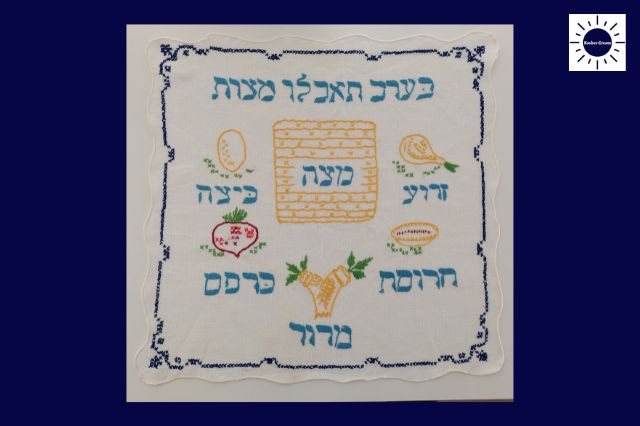 See: THE SEDER CEREMONY |
Healthy Passover Recipes  | Click to explore our Healthy Passover Recipes Celebrate Passover with Kosher Create! Find HEALTHY PASSOVER RECIPES that range from appetizers to desserts! SALADS * SOUPS * SIDE DISHES * MAIN DISHES * DESSERTS |
Healthy Passover Menus | Click to visit our Healthy Passover Menus Planning Seder? We’d love share with you two healthy Passover menus. |
Healthy Passover Desserts | This upcoming holiday you’re in for a treat. We invite you to Create Healthy Passover Desserts using Kosher Create’s tried-and-tested recipes. |
What is Kosher – Passover Section | Click to learn more about what is Kosher during Passover. |
Exploring Passover
- WHAT IS PASSOVER?
- WHEN IS PASSOVER CELEBRATED?
- WHY IS PASSOVER CELEBRTATED?
- HOW IS PASSOVER OBSERVED?
WHAT IS PASSOVER?
The holiday of Passover is a celebration of spring, freedom, hope and the transformation of the Jewish people from slavery to nationhood.
The Jewish Bible unfolds the complex dramatic story that has been told throughout the generations. The narrative focuses on Moses’s struggle to free the Jew’s from Egyptian bondage and the journey of the Jews toward liberation. Their receiving of the ten commandments laid the moral and ethical groundwork that has guided society until today. Passover is a time for rejoicing and remembrance.
WHEN IS PASSOVER CELEBRATED?
The holiday of Passover, PESACH, is observed from the 15th till the 22nd day of the Jewish month Nissan.
WHY IS PASSOVER CELEBRATED?
Passover commemorates the biblical exodus and liberation of the Jews from Egypt. It is therefore considered the holiday of freedom, ZMAN CHERUTENU.
Another name for the holiday is CHAG HAMATZOT, the holiday of matzah. MATZAH is unleavened bread that Jews eat throughout Passover. It is similar to the hurriedly baked bread that the Israelites ate after their hasty departure from Egypt.
Passover is also called CHAG HAAVIV, the Festival of Spring. It is one of the SHELOSHET HAREGALIM – the three yearly occasions where Jews pilgrimaged to the Holy Temple in Jerusalem: Passover, Shavuot and Sukkot.
HOW IS PASSOVER OBSERVED?
According to Jewish law, the consumption of five types of grains (wheat, barley, oat, rye and spelt) is restricted throughout the holiday. The grains are only permitted when subjected to stringent supervision to ensure that they are free from Chametz, i.e., leavening or rising.
The owning and eating of Chametz, i.e., leavened products, is forbidden during the holiday. Special preparations that include disposing of leavened products precede the Passover holiday.
After all the preparations are completed, the home is ready to receive the Passover holiday. The culmination is the Passover Seder where family and friends join to read the Haggadah and enjoy a festive meal. Enough wine or grape juice is placed on the table in order to fulfill the requirement of drinking four cups of wine throughout the Seder ceremony. A special cup is placed on the table for Elijah the prophet.
The HAGGADAH recollects the miraculous story of the Jew’s redemption from their slavery in Egypt. The elaborate text guides us through the SEDER with stories, symbols and songs. Seder means order and this order takes us through the Jew’s journey to freedom.
THE SEDER PLATE
To aid with the flow of the Seder, a central SEDER PLATE is set. It contains food items that symbolize various aspects of the Passover story.
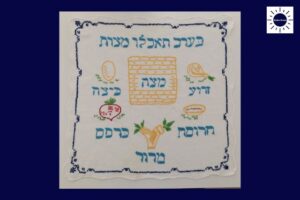
A Matzah Cover
Seder Plate Symbols
MARROR – Bitter Herbs that symbolize the bitterness of slavery. It is customary to use romaine lettuce or horseradish.
CHAROSET – A mixture of nuts and fruit that resemble the mortar used by the Jewish slaves in Egypt to erect buildings.
ZROA – A poultry wing or lamb shank bone is roasted and placed on the plate to symbolize the ancient Passover sacrifice.
EGG – A hardboiled egg, traditionally burnt, represents the sacrifices in the ancient Temple of Jerusalem.
KARPAS – A vegetable such as celery leaves, parsley, radish or potato.
Salt water is provided for the dipping of the vegetable.
3 MATZAHS – Part of the middle MATZAH becomes the AFIKOMAN.
THE SEDER CEREMONY
KADESH – The Kiddush blessing over the first cup of wine is recited.
URCHATZ – The ceremonial washing of hands.
KARPAS – The dipping of vegetables in salt water. Celery leaves, parsley, radish or potato are customarily used. Salt water symbolizes the tears shed by the enslaved Jews in Egypt.
YACHATZ – The middle of the three matzahs is broken in half. The larger piece becomes the AFIKOMAN that is hidden, later to be found by the children of the house.
MAGID – The story of Passover is recited. MA NISHTANA – The four questions that deal with the uniqueness of the night is recited. The second cup of wine is drunk.
RACHTZA – Hands are washed for the second time, this time with a blessing.
MOTZI MATZAH – Two blessings are recited, the first one for the symbolic bread, the second for the matzah.
MAROR – Bitter herbs are eaten. Romaine lettuce or horseradish is typically used. This reminds us of the bitter suffering of the Jews in Egypt.
KORECH – A sandwich is made from two pieces of matzah and charoset and sometimes bitter herbs.
SHULCHAN ORECH – A festive meal is served.
TZAFUN – The afikoman, hidden at the beginning of the meal, is eaten. It is customary to let the children of the house find the hidden afikoman. This lets them play an active part in the Seder and arouses their interest.
BARECH – The blessing after the meal Birkat Hamazon is recited and the third cup of wine drunk.
HALLEL – The Hallel, prayers of praise to G-d are recited. The fourth cup of wine is drunk.
NIRTZAH – The reciting of the Haggadah is completed, and many partake in the singing of Passover songs. A special atmosphere ensues. One of hope and renewal.
Chag Shameach from Kosher Create!
Looking for holiday recipes & ideas?
Explore our JEWISH HOLIDAYS center!